The twelve brand archetypes, and how to choose yours
Archetypes have been used in branding for decades, usually as a workshop exercise that produces a slide nobody opens again. Used properly they decide something concrete: how your brand builds a sentence.
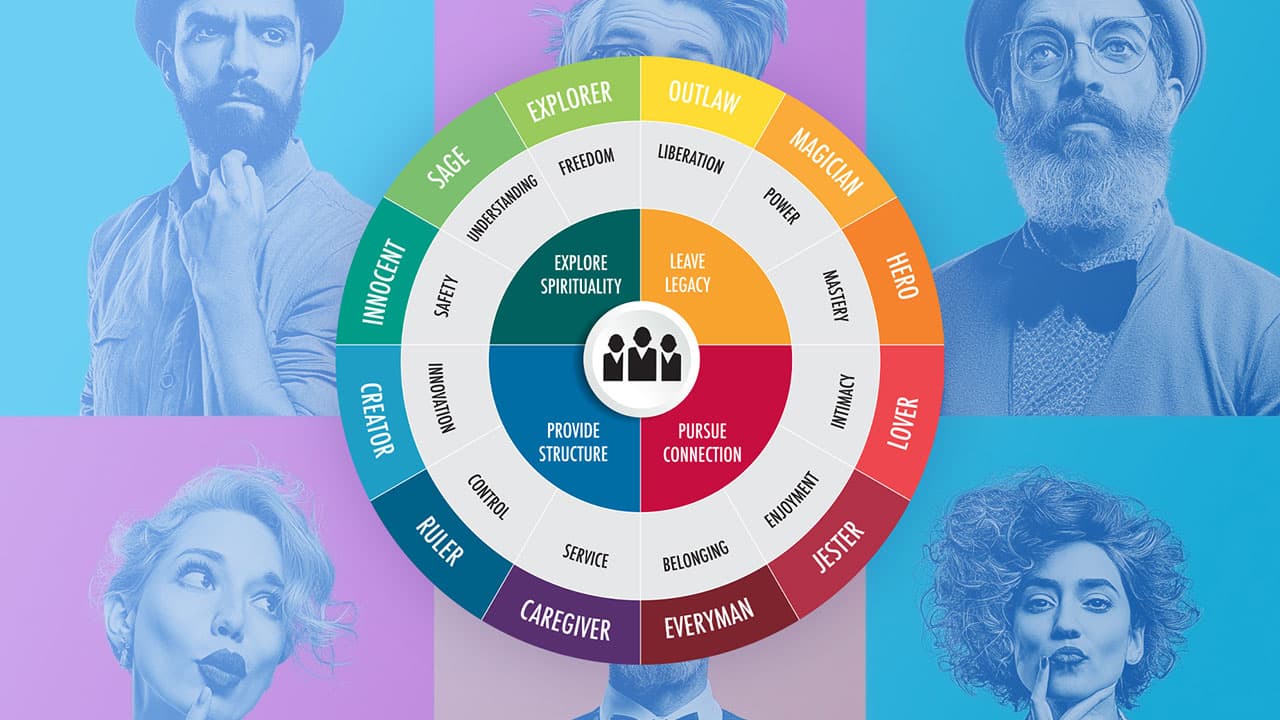
What an archetype is for
An archetype is a recognisable character pattern. Jung argued they recur across cultures because they encode ways of being that people understand without explanation.
For a brand, the useful part is that a character implies behaviour, and behaviour shows up in writing. A brand that behaves like an expert makes claims and supports them. One that behaves like a challenger names the thing everyone is avoiding. One that behaves like a guide puts the reader at the centre and takes second billing.
That is more useful than a tone word. "Professional and approachable" describes most companies and decides nothing. "Sage" tells you how to open a paragraph.
The twelve
The Sage. Pursues truth and understanding. Writes with evidence, builds ideas in order, respects the reader's intelligence. Risk: lecturing.
The Innocent. Optimistic, straightforward, wants things to be simple and good. Writes plainly and warmly. Risk: naivety.
The Explorer. Values freedom and discovery. Writes outward, towards what is possible and not yet done. Risk: restlessness with no conclusion.
The Outlaw. Disrupts what is broken. Names the problem others avoid and takes a position. Risk: contrarianism as a substitute for substance.
The Magician. Makes transformation happen. Writes about before and after, and about the change itself. Risk: overclaiming.
The Hero. Rises to the challenge. Direct, decisive, action-oriented. Writes short and forward. Risk: aggression, or making the brand the hero instead of the customer.
The Lover. Values intimacy, beauty and experience. Writes sensorily, about how something feels. Risk: style with nothing underneath.
The Jester. Lives in the moment, uses humour and surprise. Writes with pace and unexpected turns. Risk: not being taken seriously when it needs to be.
The Everyman. Belongs, connects, is one of us. Writes conversationally without hierarchy. Risk: blandness.
The Caregiver. Protects and looks after. Writes with reassurance and attention to what worries people. Risk: sounding paternal.
The Ruler. Creates order and sets the standard. Writes with authority and precision. Risk: coldness.
The Creator. Makes things and values craft. Writes about the work itself and how it is made. Risk: self-indulgence.
Why a blend, not a single archetype
Almost no brand is one archetype purely, and a brand that is can be exhausting.
A pure Hero is relentless. A pure Sage never stops explaining. A pure Jester is tiring by the third paragraph.
Real brands read as a dominant character with a supporting one that softens or sharpens it. Sage with Caregiver is an expert who is genuinely on your side. Hero with Creator is decisive about craft. Outlaw with Sage is a challenger who has done the reading, which is considerably more persuasive than a challenger who has not.
The blend is where the personality actually lives. The dominant sets the behaviour; the supporting decides what the behaviour feels like.
How to choose, and how not to
The common failure is choosing aspirationally. A team in a room picks the archetype they would like to be, usually Hero or Magician, and the writing that follows never sounds like the company.
Better questions, all about behaviour rather than image:
When a customer has a problem, what does the company actually do? Fix it personally, explain why it happened, or challenge the process that caused it. That is Caregiver, Sage and Outlaw respectively.
What does the company find embarrassing? Brands are often clearer about what they would never say than what they stand for, and the negative is diagnostic.
Who in the company is most obviously the brand? There is usually one person whose way of talking about the work everyone recognises as right. What are they doing?
What would customers say without prompting? Not the positioning. What they tell colleagues about you.
What changes once you have chosen
An archetype only earns its place if it changes what gets written. Applied properly it decides:
What opens a piece. A Sage opens with a premise. A Hero opens with the outcome. An Outlaw opens with what everyone is getting wrong.
Sentence length and rhythm. Ruler writes in complete, ordered sentences. Jester varies deliberately. Everyman uses contractions and short clauses.
What is asserted and what is argued. A Sage supports claims. A Hero states them. Same fact, different confidence.
What is never said. As useful as anything positive. A Caregiver does not use pressure. A Ruler does not use slang.
If your archetype does not change any of those, it is a slide rather than a decision.
Where it usually goes wrong
Chosen once and never used. The workshop happens, the deck exists, and the next piece of copy is written the way it always was.
Confused with tone of voice. Tone is the surface. Archetype is the behaviour underneath. Tone changes by channel; archetype does not.
Applied only to marketing. A brand with a Caregiver archetype and a hostile refund policy has a positioning problem, not a copy problem.
Too many. A brand claiming four archetypes has none. Two, one dominant.

Inside the five layers: business, brand, audience, framework, channel
A reference guide to the model BraVo runs on, and what each layer actually changes about the words that come out.

Why AI content sounds generic, and what actually fixes it
Everyone can spot AI writing now. The problem is not the model, it is what the model was given to work with.
Find your archetype, then use it
BraVo establishes your blend and derives the voice, tone and writing rules from it, so every piece behaves accordingly.