How to define your brand voice: a practical method with a worked example
To define your brand voice, start from why the business exists and what kind of character it is, then turn that character into rules a writer can follow and check. This method takes an afternoon to draft and a few weeks of use to settle.

How do you define your brand voice?
You define a brand voice in five steps. Settle the purpose and personality behind the business. Write behaviour rules that describe how that personality writes. Build a short list of things you say and things you don't. Describe how tone adjusts for each audience. Then test it on real pieces and revise.
The order matters. Most teams start with the words, picking adjectives or copying a competitor's style, and end up with a voice that has nothing underneath it. When the voice comes from purpose and character, the rules have a reason, and a reason is what lets a writer handle the situations your guidelines never covered.
Throughout this post we'll follow one invented business: Harrow & Vale, a two-person garden design studio in Somerset that designs gardens for homeowners and works with a handful of local builders on new housing schemes.
Step one: start from purpose and personality
Before you describe how the business sounds, decide what it is for and who it is.
Purpose is the reason the business exists beyond making money, written in one plain sentence. Avoid anything that could sit on a motivational poster. Harrow & Vale's: "We design gardens people actually use, that look better in their tenth year than their first."
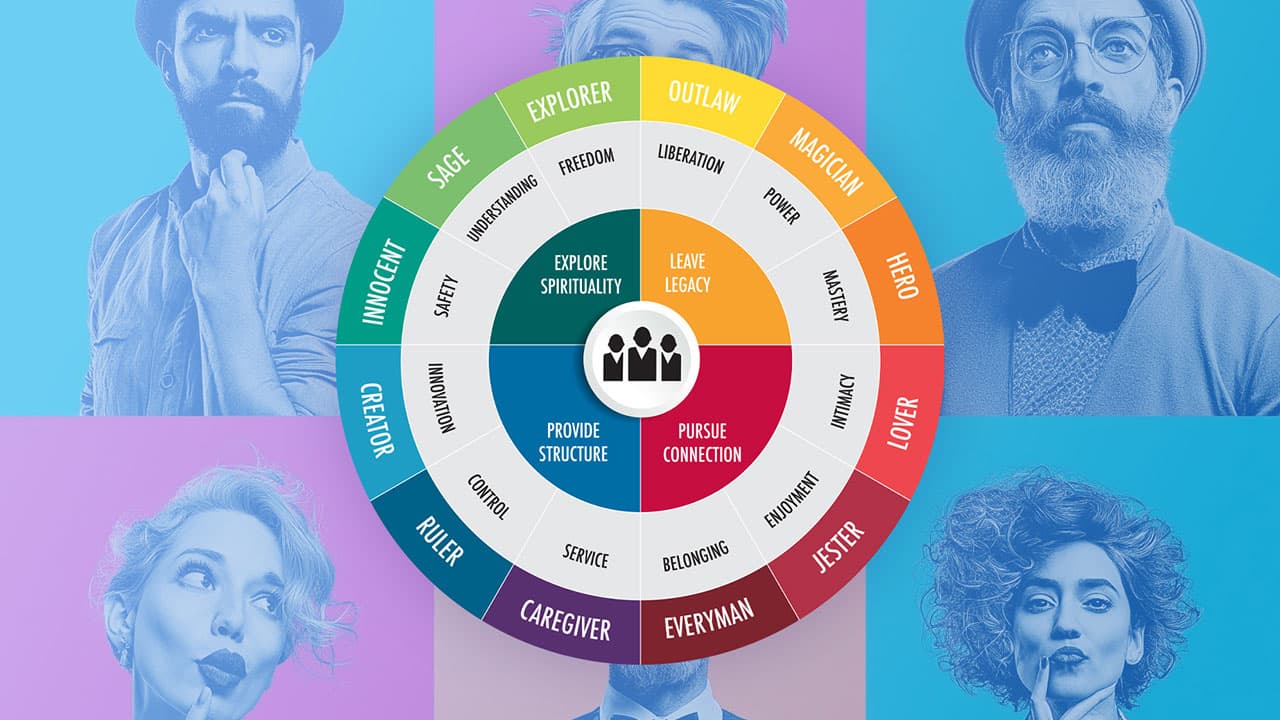
Personality is the character. Brand archetypes are the quickest way in. The twelve classic archetypes (the Sage, the Creator, the Caregiver, the Explorer and so on) each carry a set of values, motivations and instincts about how to speak. Few businesses are a single archetype, so pick a primary and a secondary. The blend is where the distinctiveness comes from.
Harrow & Vale lands on the Creator first and the Caregiver second. Creator because the work is design-led and they hold opinions about plants and materials. Caregiver because their clients are anxious about spending a lot of money on something they can't picture, and the studio's job is partly to take that anxiety away.
That blend already tells you a good deal. The voice will have opinions and will explain them, it will be visual and specific, and it will be patient with people who don't know the vocabulary.
Step two: write behaviour rules
Now translate the personality into rules about writing. Each rule should describe something visible on the page, so that anyone could check a paragraph against it.
A weak rule says "we are warm". A usable rule says "we answer the client's question in the first sentence, then explain".
Harrow & Vale's rules:
- We name plants by their common name first, with the Latin in brackets when it helps someone buy the right one.
- We give a recommendation and say why. We don't list five options and leave the client to choose.
- We describe gardens through how they're used ("somewhere to eat outside from May to September") before how they look.
- Sentences are short in emails and can stretch in design proposals, where the client is reading slowly.
- When something will cost more or take longer, we say so in the first paragraph.
- No exclamation marks. Enthusiasm shows through specifics.
Six or seven rules is plenty. If you have twenty, nobody will remember them, and the important ones get lost among the trivial.
Step three: build a we say, we don't say list
Rules cover behaviour. This list covers vocabulary, and it is the part of a voice document people actually refer back to.
For each line, pair a phrase you use with the phrase you avoid. Draw the "we don't say" half from real writing: your own old emails, competitor websites, the generic phrases that creep in when nobody is paying attention.
- We say garden. We don't say "outdoor living space".
- We say it'll take about three seasons to fill in. We don't say "instant impact".
- We say this will need watering weekly in the first summer. We don't say "low maintenance".
- We say we'd plant fewer things, more of each. We don't say "a curated planting palette".
- We say here's what we'd do. We don't say "we offer a range of solutions".
Look at the third line. Harrow & Vale avoids "low maintenance" because it is usually untrue in the first year, and the Caregiver side of the brand refuses to set up a disappointment. Every line on a good list has a reason like that behind it.
Step four: adjust tone for each audience
Your voice stays the same for everyone. Your tone shifts depending on who is reading and what they need.
Harrow & Vale has two quite different audiences. Homeowners are spending their own money on something emotional. They want reassurance, pictures in words and a sense of what living with the garden will feel like. The builders are commercial buyers: they want the cost per plot, the planting schedule and proof the studio delivers on time.
So the tone guidance reads:
Homeowners: more explanation, more description of how the garden will be used through the year, reassurance about cost and timing early. Warmer.
Builders: lead with numbers and dates, shorter paragraphs, no description of how a garden feels unless it helps sell the houses. Firmer.
Both are recognisably Harrow & Vale. Both get the recommendation-with-a-reason and the honesty about maintenance. What changes is the order of information and how much is said. If you write for more than one kind of reader, describe each one this way, including what they are worried about and what they need to see before they act.
Step five: test it on real writing
A voice document isn't finished until it has been used. Take three or four real pieces, such as a recent email, a page from your website and a social post, and rewrite each against the new rules. Then check:
Could someone who has never met you tell the rewritten pieces came from the same business? Did any rule turn out to be impossible to apply, or so vague it changed nothing? Did you find yourself breaking a rule for a good reason? If so, the rule needs an exception written into it.
Here is a quick before and after from Harrow & Vale. The old website line read: "We create stunning, low-maintenance outdoor living spaces tailored to your lifestyle." Rewritten against the rules, it becomes: "We design gardens you'll use most evenings from May to September. We'll tell you honestly how much looking after they need, and we'll plant them to get better every year." Longer, yes, but every phrase now says something a competitor couldn't copy without changing how it works.
Give it to someone else too. A colleague, a freelancer, or an AI tool. The test of a voice document is whether it produces recognisable writing in hands other than yours. If the result comes back generic, the document is still relying on things only you know.
Then put a date in the diary three months out to revise it. Voices settle with use, and the first version always has a rule or two that don't survive contact with real work.
Where the definition usually breaks down
Most voice documents get written, shared once and forgotten. The writing drifts back to habit within a month, because the document sits in a folder while the writing happens somewhere else.
The fix is to keep the definition next to the work. BraVo is built for this: your purpose, archetype blend, voice and tone sit in a brand profile alongside up to three audiences, and every piece is generated through them, with a validator revising anything that falls short of the writing rules. You still edit, and you can change the profile whenever the voice evolves.
With or without a tool, start with step one today. Write the purpose sentence and pick your two archetypes. Everything else follows from those, and they are the parts teams most often skip.

What is brand voice? A working definition, with examples
Brand voice is how a business sounds whenever it writes. A clear definition, how it differs from tone, and what a voice is actually made of.
The twelve brand archetypes, and how to choose yours
Archetypes are the most useful branding model in common use, and the most commonly misapplied. Here is what each one actually does to your writing.
Put your voice to work
BraVo stores your brand voice and up to three audiences in one profile and writes every piece through them.